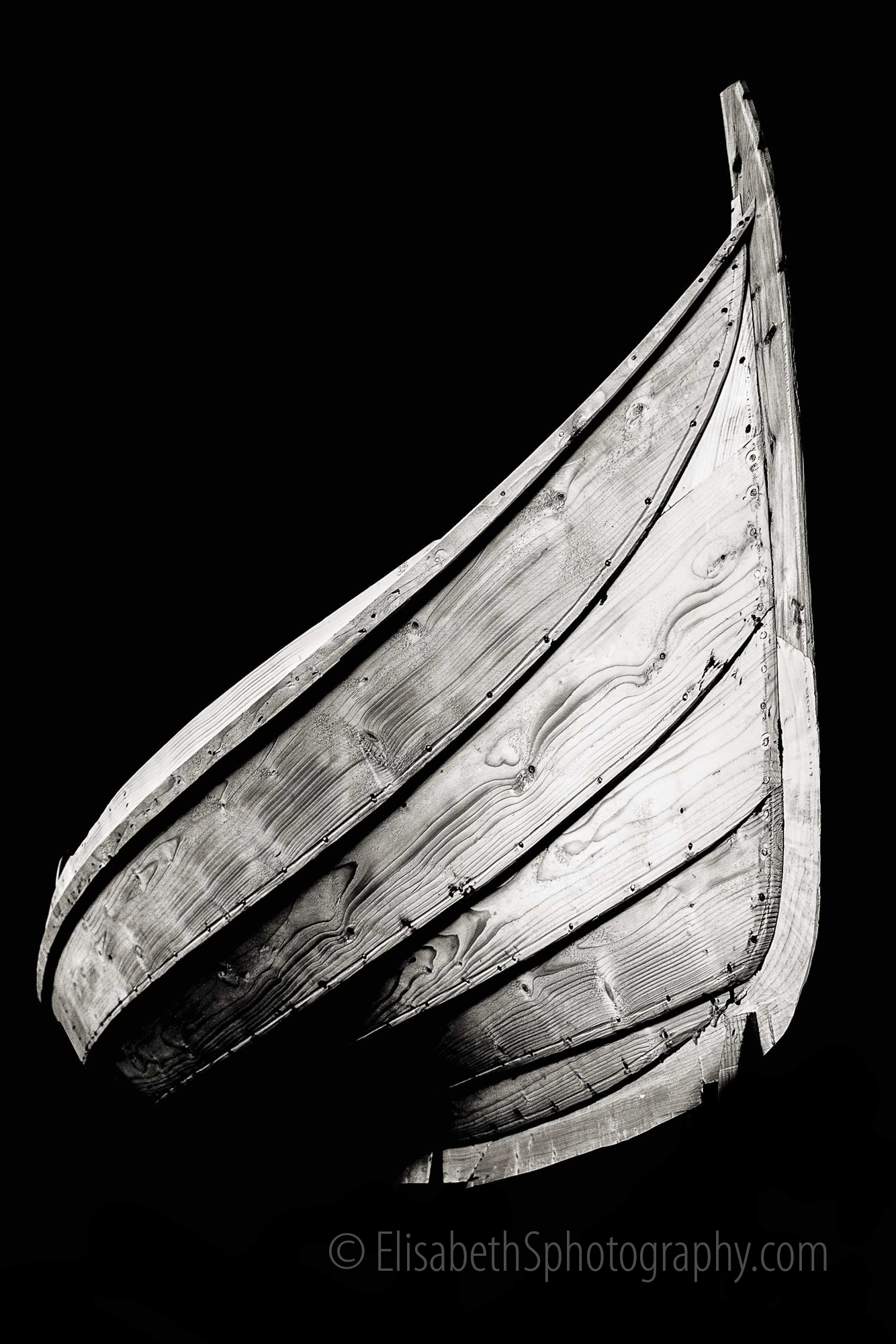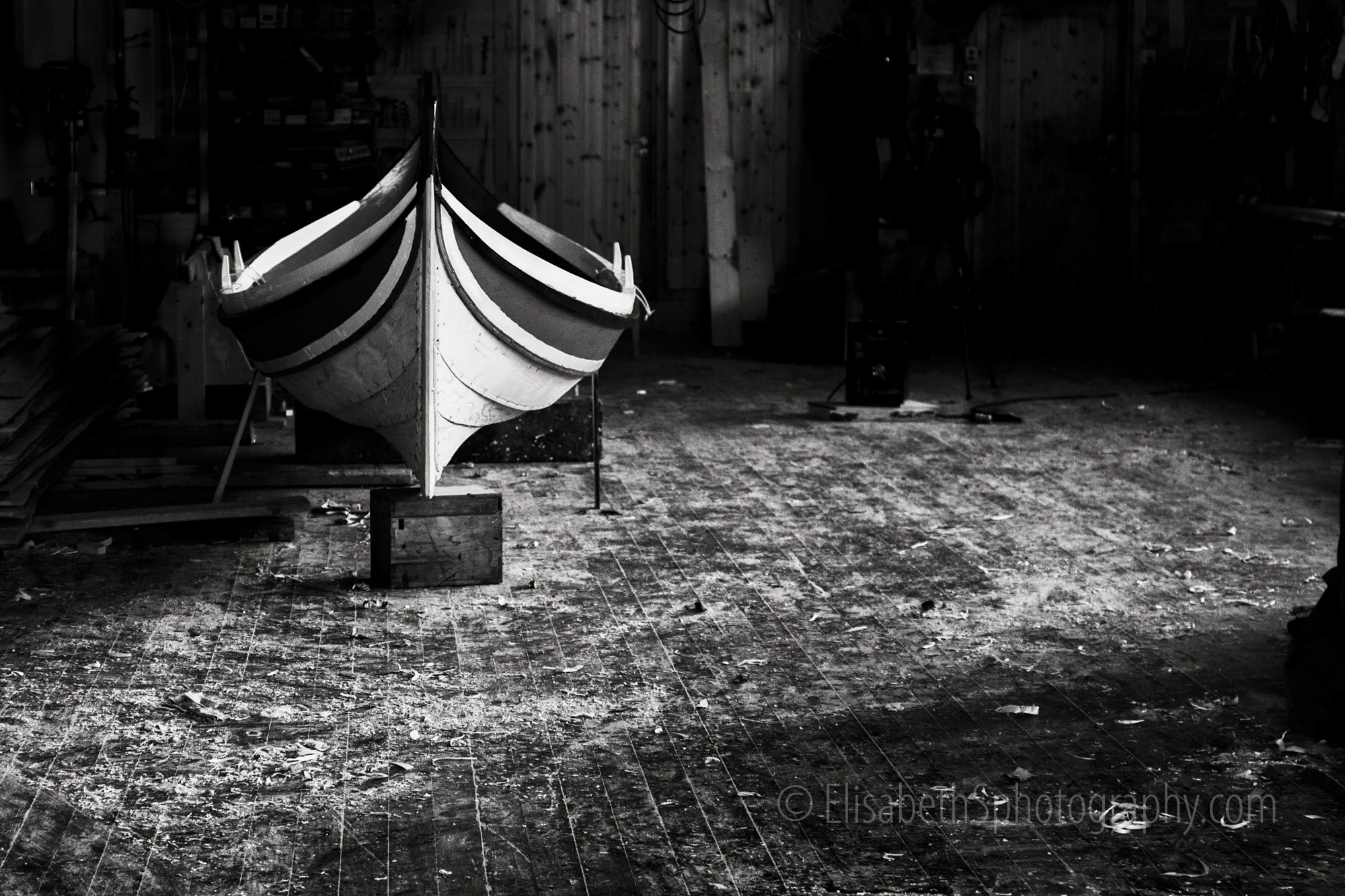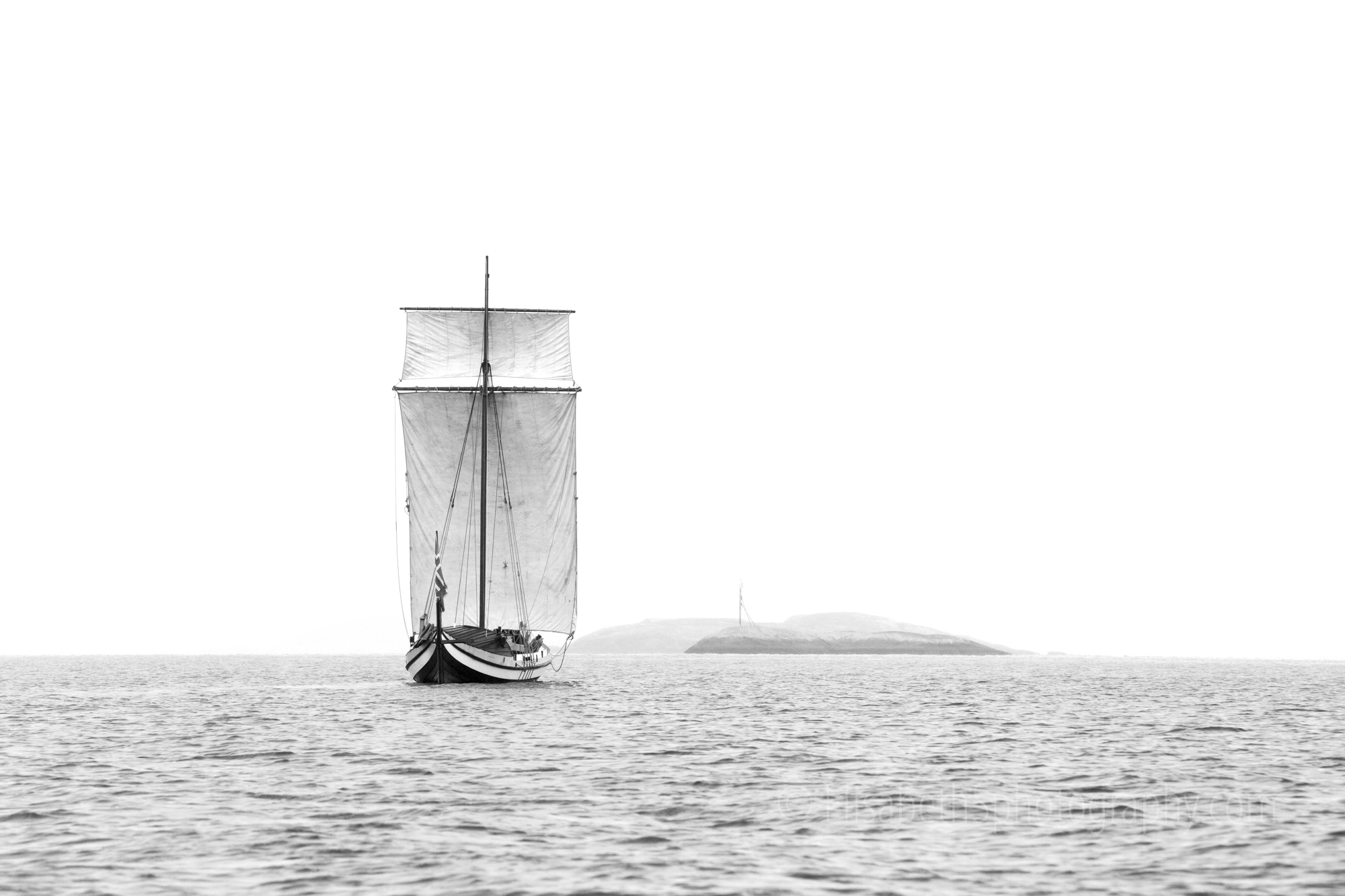
The graceful Nordland boat with its slender form and excellent seafaring ability has been the foundation for survival along the coast of northern Norway for centuries. It still bears resemblance to the Viking ships.

The boatbuilding tradition has been passed down throughout the ages, often from father to son. A son could work with his father as a mentor for ten to fifteen years before he was trusted to build a Nordland boat on his own. This was the case for the Alsli brothers who still carry on this unique tradition. Jann and Erling Alsli have built most types of the Nordland boat from the smallest Bindalsfæring to the majestic Fembøring. They represent the fourth and last generation in their family of boatbuilders.
The brothers are in their sixties and live together in their childhood home as the last residents in the little hamlet of Alslia in the municipality of Bindal, in the southern part of the county of Nordland in Norway. Jann still builds boats while Erling has become a bus driver. The almanac and the weather forecast are necessities in their everyday life as there are no roads to Alslia. They depend on the boat to cross the fjord to get to the road, the store, to people and to the bus that Erling drives. Their home has always been a warm and welcoming one. There are seagull incubators by the tenfold in the fields of Alslia and they stand like beautiful installations in the landscape. A domesticated squirrel has a bowl with nuts in the hallway of the house. The brothers still receive boatbuilders and others who want to learn the craft or simply experience their place.
The boatbuilding traditionally starts by carefully selecting the right trees and roots to make the different parts of the boat. The wooden boat clamps that their great-grandfathers made are still being used by the brothers, their polished surfaces shiny and bright due to frequent handling over decades. They hang on the wall in the boathouse as witnesses of the passing of time. The master boatbuilders use templates and there are books and descriptions on how to build the boats, but even so it is challenging to shape the hull into a real Nordland boat with its characteristic lines and seaworthiness. Every boat is unique.
The art of boatbuilding lies in the eye and the hand of the craftsman, it requires talent, mentoring and experience. As time changes, so do the demands, thus threatening the lines of the boatbuilding traditions which hark back for centuries. The once so vital lines and shapes of the Nordland boats might soon be history.
Lifelines is inspired by my childhood in Bindal when the Nordland boats came to honour and dignity again in the late seventies and eighties. The old boats reappeared from their boat houses, they were rigged, and the men put them in sailing order again. My grandfather from Bangstad was one of the few who still could transform crooked trees and planks of spruce into a Nordland boat, a piece of jewellery, a tradition, a tool that belonged and that simply gave a sensation of wellbeing when touched. I admire the old craft, I am fascinated by the beauty of this slender vessel, the way it cuts through the waves without resistance, of the sound when the water caresses the wood.
The pictures shows glimpses of the life and way of living in Alslia, we see the boats sailing on the sea, the beautiful lines, the art, the once so vital art of boatbuilding.
This is a tribute to the Nordland boats and its boatbuilders, past and present.
Elisabeth Strand,
Korsenget Bindal 2017